Define the load and the placement first
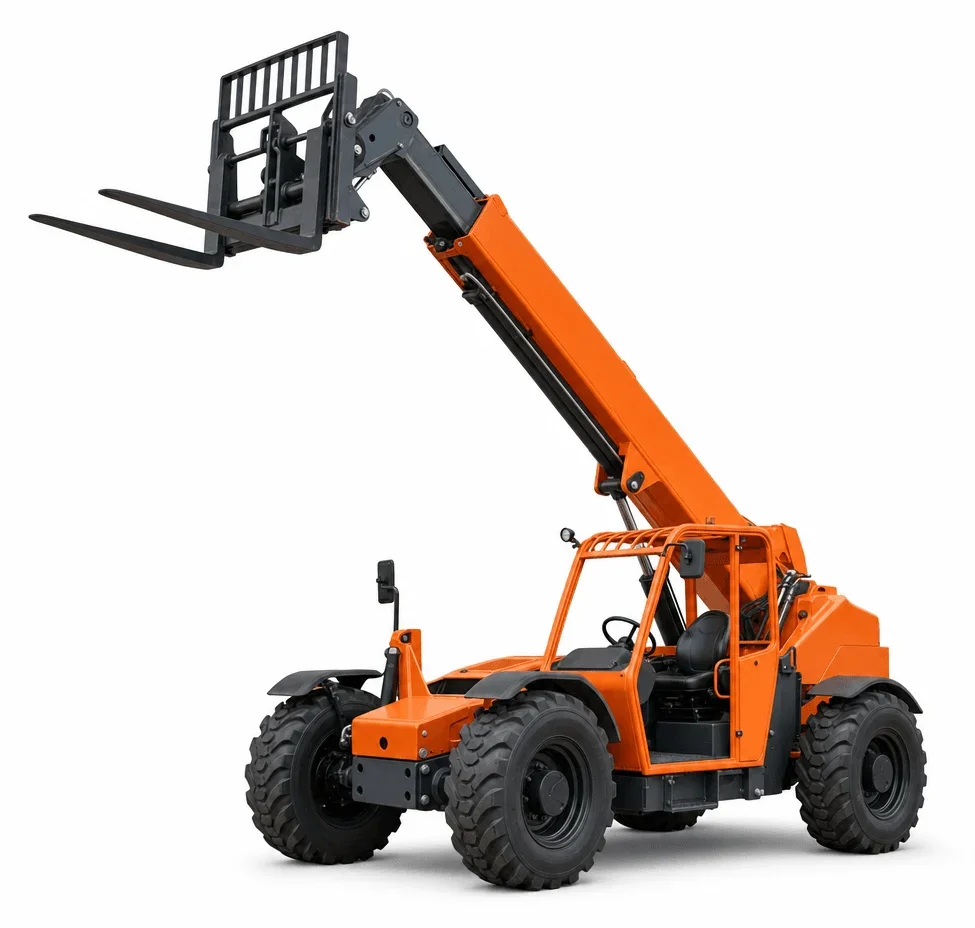
Work backward from where the load must land: - Maximum load weight and its center of gravity - Placement height and outreach from the tires to the set point - Pallet size or rigging geometry that affects fork spacing and visibility These factors map directly to a telehandler’s load chart and carriage options.
Terrain and travel path in Orlando
- Sandy or recently graded areas are common around expansions. Ground conditions influence tire selection and whether the travel path needs preparation to support repeated passes.
- Tight back-of-house corridors at entertainment venues and convention floors may restrict turning radius. Compact telehandlers fit better when moving from exterior staging to interior drop zones.
Visibility, attachments, and stability envelope
- Boom angle and extension reduce capacity fast at long reach. Positioning the machine closer to the set point increases margin.
- Frame leveling and stabilizer features expand where a load can be placed, but only within the limits stated by the unit’s chart and instructions.
Orlando use cases
- Moving pallets of finish materials from exterior laydown over sandy lots to interior install areas
- Placing mechanical units and duct sections at mezzanines where a crane mobilization is out of scope
- Feeding elevated work platforms with staged bundles to reduce trips
Related equipment
- For personnel access to the placement area, compare /telescopic-boom-lift-rental/ and /articulating-boom-lift-rental/
- For interior slab tasks once materials arrive, see /electric-scissor-lift-rental/ or /vertical-mast-lift-rental/
Actual site conditions, the selected unit’s instructions, and job procedures govern how and where a telehandler can operate.